
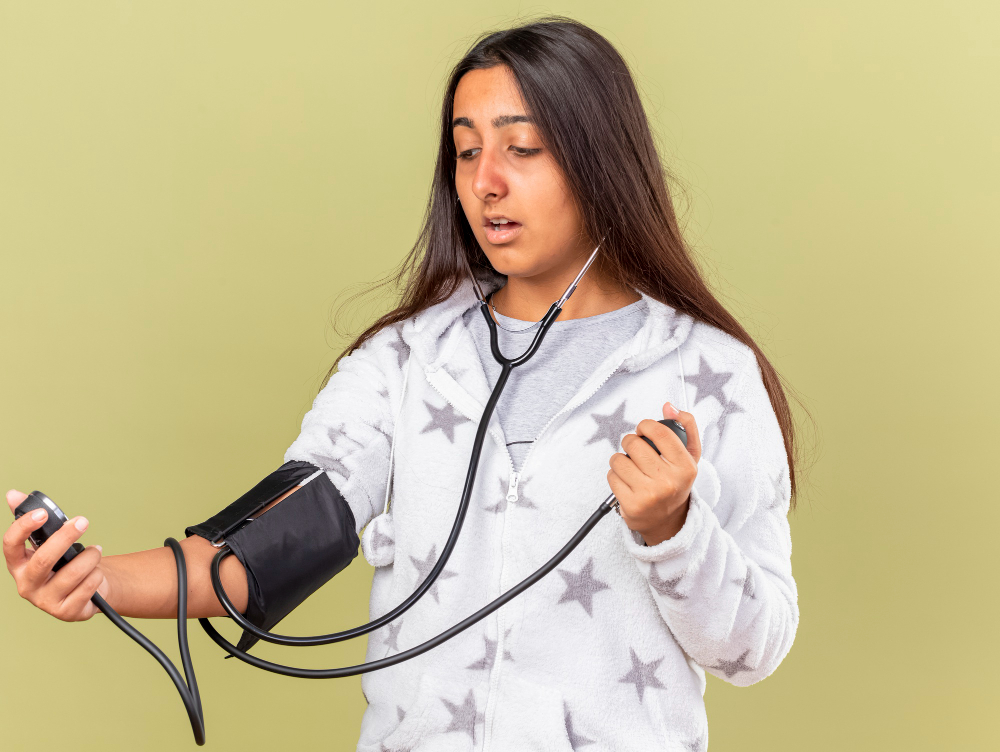
What is High Blood Pressure in Children?
High blood pressure in children, also called pediatric hypertension, means the force of blood against the artery walls is too high. While many people think of high blood pressure as an adult problem, children can have it too. Early detection is important because untreated high blood pressure can lead to serious health issues later in life. In fact, childhood blood pressure screening helps find problems before they become severe. According to the CDC, about 3.5% of children in the US have high blood pressure.
Common Symptoms and Warning Signs
Often, high blood pressure in kids does not cause clear symptoms. However, some children may show early signs of high blood pressure. For example, you might notice:
Still, many children have no symptoms at all. Therefore, regular check-ups are important. If you notice any of these signs, talk to your child’s doctor.
Causes and Risk Factors in Kids
There are several reasons why a child may develop high blood pressure. Sometimes, it is linked to other health problems. In other cases, it happens on its own. Common causes and risk factors include:
Additionally, some medicines can raise blood pressure in children. Because of these risks, it is important to know your child’s health history.
How High Blood Pressure is Diagnosed in Children
Doctors use a simple test to check blood pressure. However, measuring blood pressure in children is different from adults. The doctor will compare your child’s readings to what is normal for their age, height, and gender. Usually, the doctor will:
Because blood pressure can change, doctors may ask for more than one visit. Early signs of high blood pressure in kids can be missed if only checked once. That is why regular childhood blood pressure screening is important.
Treatment Options and Lifestyle Tips
Treating high blood pressure in children often starts with healthy habits. In many cases, lifestyle changes can lower blood pressure. For example:
Sometimes, doctors may prescribe medicine if lifestyle changes are not enough. However, most children respond well to healthy habits. Always follow your doctor’s advice for the best results.
Prevention and Early Detection: Why It Matters
Early detection of high blood pressure in children can prevent serious problems later. For instance, untreated high blood pressure can lead to heart disease, kidney damage, or stroke as your child grows. Regular check-ups help catch issues early. In addition, teaching kids healthy habits now can protect them for life. The American Academy of Pediatrics recommends regular blood pressure checks for all children starting at age three. Therefore, do not skip routine visits. Early action makes a big difference.
If you have concerns about your child’s blood pressure, consult DrAbhiram Sadashiv for personalized advice.